How to Tell If Omaha Hail Actually Damaged Your Roof
The morning after a hailstorm, west Omaha fills up with trucks. Somebody knocks, says your roof is destroyed, and offers to handle everything. Sometimes they are right. Often they are looking at a roof that took a beating and will still be fine in ten years. You can do a fair amount of triage yourself before anybody gets on a ladder.
Start with the stone size
Size is the single best predictor. The Nebraska Department of Insurance puts the rough threshold at about 1¼ inches — half-dollar size — before hail damages heavy composite or wood-shake shingles, and about 1 inch, a quarter, for lightweight composites. Pea-sized hail that rattled your gutters for ten minutes almost never bruises a shingle.
If you did not measure anything, check the storm reports for your ZIP code. Omaha hail is famously patchy — 156th and Center can get golf balls while Benson gets rain.
Check the soft metal first, not the shingles
This is the trick every adjuster uses. Shingles hide damage. Aluminum does not. From the ground, walk the perimeter and look at:
- Gutters and downspouts — dents on the top face of the gutter or dimples on a downspout mean stones came down hard enough to matter.
- Window screens and wraps — torn screens and dented aluminum window wrap are the same story at eye level.
- Air conditioner fins — the condenser sitting beside the house is a free hail gauge. Flattened fins on the north and west faces are a strong signal.
- Vents and flashing — dented ridge vent caps and dinged pipe flashing are collateral damage adjusters count.
If every one of those is clean, the odds your shingles took functional damage drop a lot.
What granules in the downspout do and do not prove
A pile of black grit at the bottom of a downspout gets used as a sales prop constantly. Asphalt shingles shed granules their whole life, heaviest in the first year and again near the end. Granule loss on its own proves nothing. Granule loss plus dented gutters plus a confirmed storm with big stones is a real pattern.
What actual hail damage looks like on a shingle
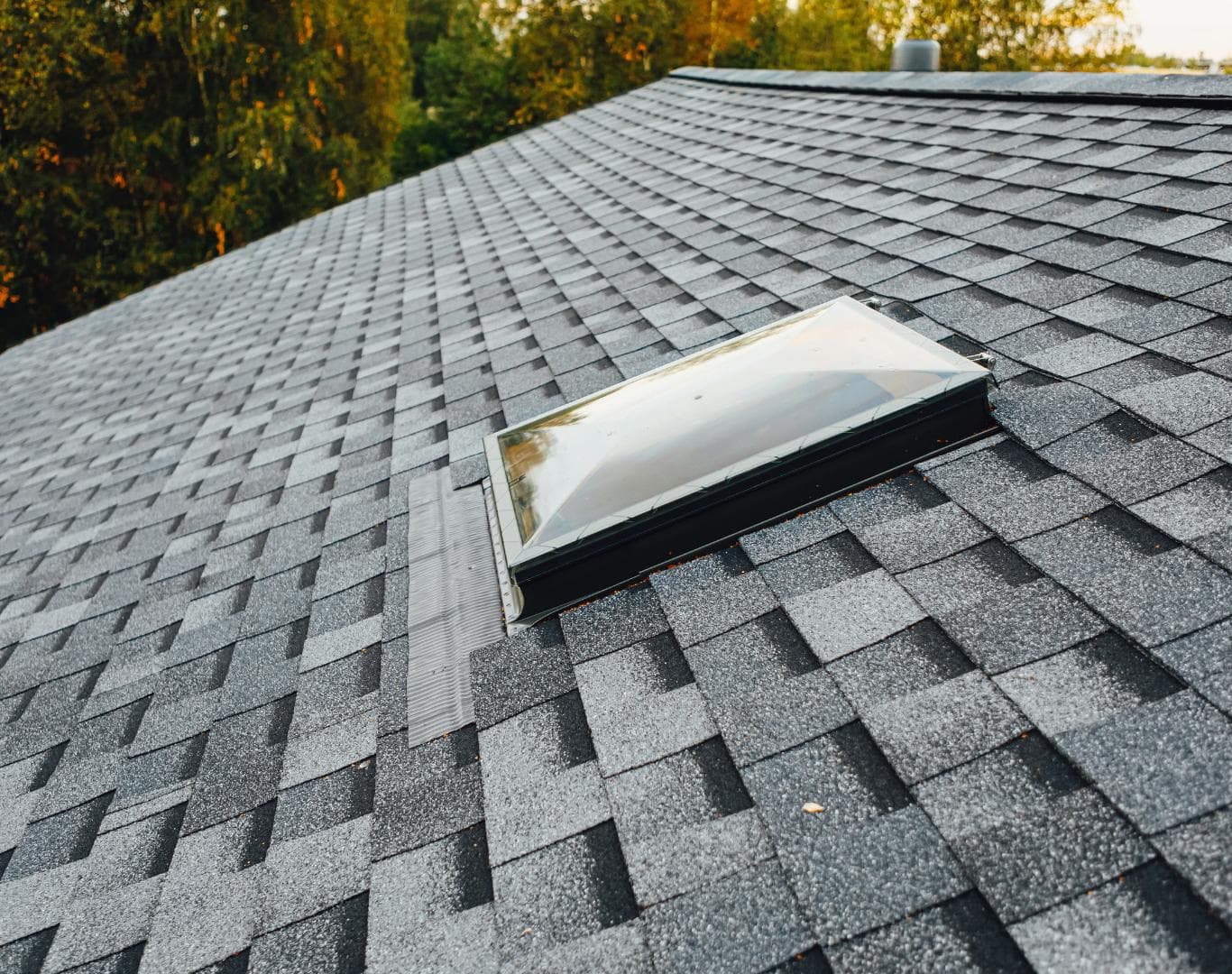
Up close, a functional hail hit is a dark, soft bruise — the mat underneath is fractured, and the spot gives slightly under a thumb, like a bruise on fruit. It is round and randomly scattered. That is the part people get wrong: damage that lines up in rows, or clusters along a walking path, is foot traffic or manufacturing scuffing, not hail.
Should you file a claim?
Not automatically. The Department of Insurance advises against filing when the repair will cost less than your deductible, and some carriers count a wind or hail claim at renewal even when they pay nothing at all. A wind and hail deductible is often a percentage of the dwelling value rather than a flat number, so read that page of your policy before you call.
If it is a real claim, get an independent inspection first so you know roughly what the scope should be. Then have your roofer meet the adjuster on site. That is where missed slopes, extra layers, and dinged accessories get added — and where a claim quietly gets underpaid if nobody is there.
The one thing that should end a conversation
If a contractor offers to cover, waive, eat, or absorb your deductible, walk away. That is insurance fraud in Nebraska, it puts your claim at risk rather than theirs, and it tells you exactly how the rest of the job will be run.
Quick answers
How big does hail have to be to damage an Omaha roof?
Roughly 1¼ inches for heavy composite or wood shake and about 1 inch for lightweight composite shingles, per Nebraska Department of Insurance guidance. Smaller stones can still damage soft metals like gutters and AC fins without harming the roof itself.
How long do I have to file a hail claim in Nebraska?
Policies set their own deadlines and they vary, so check yours rather than assuming a year. Practically, file as soon as you have an inspection — the longer you wait, the harder it is to tie damage to a specific storm date.
Will a hail claim raise my premium?
Ask your agent, not your roofer. Carriers treat weather claims differently from at-fault claims, but a claim history still shows up at renewal. That is exactly why filing for damage smaller than your deductible is usually a bad trade.
Want someone to actually look at it?
Free inspection, photos of whatever we find, and a written recommendation — including “this roof is fine, call us in five years.”