What Is the Best Roofing Material?
What is the best roofing material? For most homeowners who want a mix of affordability, style, and repairability, architectural asphalt shingles are the honest starting point. That answer changes if you need a 50-year covering, live with extreme heat, have a low-slope roof, or want a historic look.
At Kutsch Roofing the first step is not a product brochure. It is the roof in front of us — slope, decking, flashing, ventilation, drainage, and what is already up there. A premium covering on lazy details is still an incomplete roof.
The best roofing material for your home
Architectural asphalt works best for most steep-slope roofs. It comes in a lot of colors, and a section repair is usually simpler than it is on metal, tile, or slate. Industry comparison guides treat asphalt as the best all-around material; metal, slate, and tile win on specific long-term or aesthetic jobs.
Match the material to the priority:
- Balanced cost and performance — architectural asphalt. Versatile and repair-friendly. Shorter service life than premium systems.
- Long life and low maintenance — standing-seam metal. Strong weather performance. Higher upfront cost and it needs a crew that knows the details.
- Classic high-end look — slate. Exceptional longevity. Heavy, expensive, and hard on the structure.
- Heat and Mediterranean styling — clay or concrete tile. Durable and distinctive. Weight can mean structural upgrades.
- Flat or low-slope areas — TPO, EPDM, or another membrane. Built for that drainage. Not interchangeable with steep-slope shingles.
Match the material to the roof
The visible covering is one part of a working system. Before you pick a material, confirm:
- Pitch and drainage pattern
- Whether framing and decking can carry the weight
- Local wind, hail, fire, and building-code requirements
- Flashing at chimneys, walls, skylights, and valleys
- Attic ventilation and insulation
- Whether the written estimate includes tear-off, underlayment, and disposal
If the covering is still sound and the leak is one boot or one valley, start with roof repair instead of shopping a new system.
Compare popular roofing materials
Asphalt shingles: best for most budgets
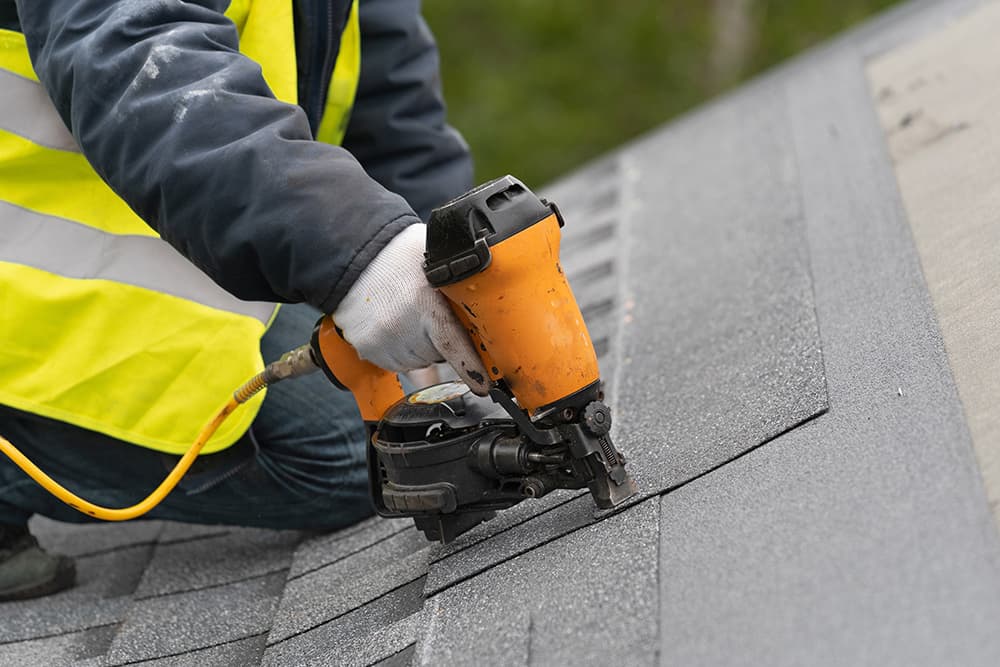
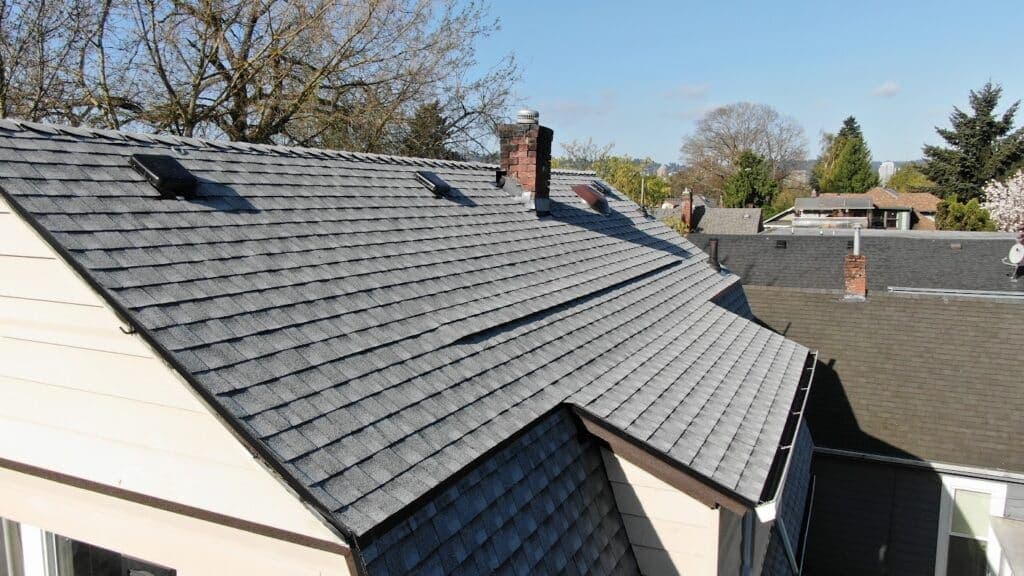
Architectural shingles are the usual choice on an average house. They look more dimensional than old three-tab, and they are practical for resale timing, budget, and later repairs. Pick a product rated for local wind. Do not judge by color alone — underlayment, nailing, ventilation, and flashing matter as much as the shingle. See architectural shingles in Nebraska.
Metal: best for long-term ownership
If you plan to stay, want something lighter than tile or slate, or take hard weather, metal is worth a written quote. A standing-seam panel can last much longer than asphalt when fasteners, sealants, penetrations, and expansion are done right. Read metal roofing in Nebraska before you treat it like a thicker shingle.
Tile and slate: best when structure and budget allow
Clay, concrete, and slate can last decades and look the part. They are not a simple upgrade. Weight, geometry, and maintenance have to be checked before anyone signs. They are not the most cost-effective material on every house.
For a new plane on an addition or a new house, see roof installation.
The bottom line
So, what is the best roofing material? For one option that covers value and everyday use, architectural asphalt is the most practical answer. Metal can be the better long-term spend. Tile or slate can be right when the structure and budget allow. Ask for a roofing-specific quote before you commit to roof replacement — not a material quote. The right system is the house, the weather, the budget, and how long you plan to stay.
Quick answers
What is the best roofing material for most homes?
Architectural asphalt shingles. They balance cost, looks, and repairability on a typical steep-slope house.
When is metal a better roofing material than asphalt?
When you plan to stay for a long time, want a lighter system than tile or slate, or need a covering built for hard weather — and you are paying for skilled installation, not a shop-panel shortcut.
Can I put tile or slate on any house?
No. Those systems are heavy. The framing and deck have to carry them. Get that checked before you sign.
Want someone to actually look at it?
Free inspection, photos of whatever we find, and a written recommendation — including “this roof is fine, call us in five years.”